



When It’s Not Just an Itch: Recognizing Vulvar...
We are excited to see so many of you join our FMEP courses. Several of...
0

We are excited to see so many of you join our FMEP courses. Several of you have requested we continue to post more practice SAMPs, so here you go!
SAMP
Jonathan Forest is a 62-year-old man with a 15-year history of type 2 diabetes who presents to your family practice complaining of burning pain in both feet. The pain is significantly worse at night, and it is now affecting his sleep. He also reports numbness and a “pins and needles” sensation. His HA1c last month was 8.4%. Medications: Metformin 1g PO BID, Lipitor 40 mg PO OD., and Perindopril 8 mg PO OD. He has a history of hypertension and gout. On examination, he appears well. BP is 127/72, HR 86. He has reduced sensation to monofilament testing at the plantar surface of both feet. He has reduced vibration sense at the great toe. There are no visible ulcers. (9 points)
Answer:
Annual foot exam starting at diagnosis of type 2 diabetes
Use of 10-g monofilament testing
Use of a 128-Hz tuning fork for vibration sense
Temperature sensation testing
Reflex assessment (e.g., ankle reflexes)
Distal-to-proximal examination
Annual reassessment of the level of sensory loss
Answer:
Gabapentin
Pregabalin
Duloxetine
Amitriptyline
Topical capsaicin cream
(Not appropriate: opioids as routine therapy)
Answer:
Daily self-inspection of feet, skin, and nails
Importance of glycemic control in slowing progression
Risk of unnoticed injuries due to sensory loss
Need to report new wounds promptly
Use of proper footwear to prevent injury
Answer: B
Answer: C
Helpful CMAJ Resource:
https://www.cmaj.ca/content/198/16/E626

We are excited to see so many of you join our FMEP courses. Several of...
0
We are excited to see so many of you join our FMEP courses. Several of...
Comments Off on Severe Hypertriglyceridemia: Recognize the Red Flags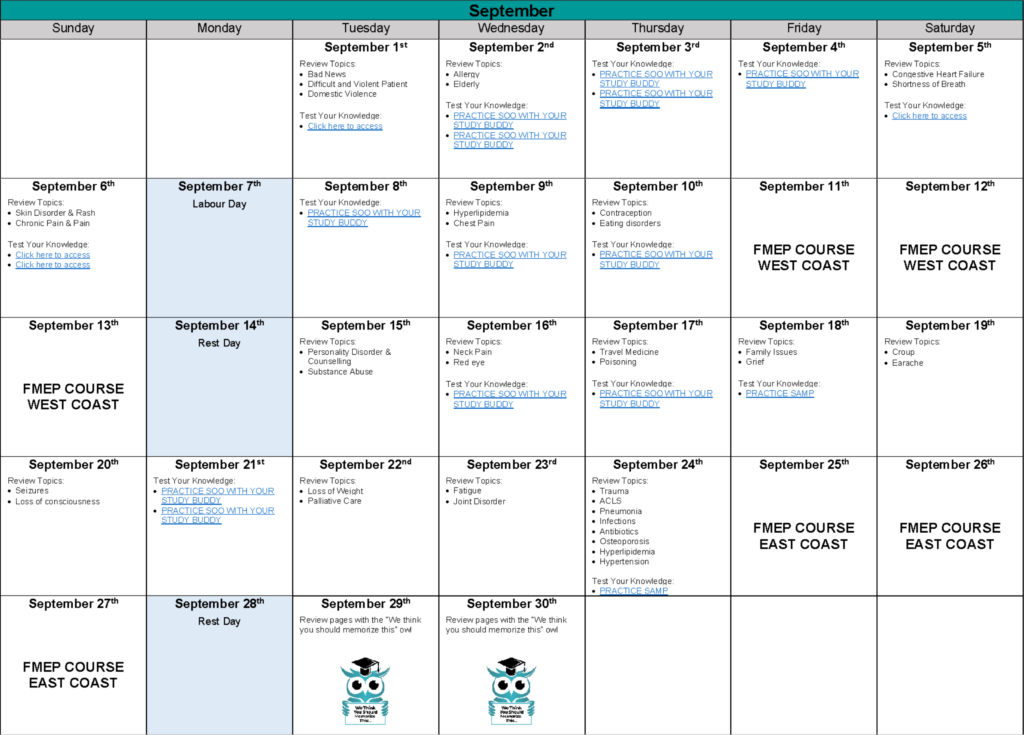
The CCFP exam is quickly approaching, and the FMEP Course is here to help! We...
Comments Off on Put Success on Your Calendar 📅
We are excited to see so many of you join our FMEP courses. Several of...
Comments Off on Post-Exposure Protection: Is DoxyPEP Right for This Patient?

