


When It’s Not Just an Itch: Recognizing Vulvar...
We are excited to see so many of you join our FMEP courses. Several of...
0

We are excited to see so many of you join our FMEP courses. Several of you have requested we continue to post more practice SAMPs, so here you go!
SAMP
You are working in a rural ED. A woman presents 20 minutes after eating shellfish at a sushi restaurant. She reports that her throat feels tight, and you notice hives all over her body. As you are speaking to her, she begins to vomit and says she is about to pass out. Her past medical history includes asthma and mild seasonal allergies. On examination, she appears uncomfortable.
BP 88/54 mmHg
HR 118 bpm
RR 24/min
O2 sat 94% on room air
On respiratory examination, she has expiratory wheezes. You note periorbital edema and widespread hives. (8 points)
Answer: Immediate use of intramuscular epinephrine 0.5 mg (0.5 mL of 1:1000) into the anterolateral thigh
Answer:
Counsel on trigger avoidance
Epinephrine autoinjector prescription (preferably 2 devices)
Education on immediate use at first signs of anaphylaxis
Training on proper administration technique
Written anaphylaxis action plan
Referral to allergist
Advise to carry an autoinjector at all times
Answer: C
Answer: D (Intranasal epinephrine is not yet approved in Canada → do NOT delay IM epinephrine)
Answer: B
Helpful CMAJ Resource:
https://www.cmaj.ca/content/197/38/E1270

We are excited to see so many of you join our FMEP courses. Several of...
0
We are excited to see so many of you join our FMEP courses. Several of...
Comments Off on Severe Hypertriglyceridemia: Recognize the Red Flags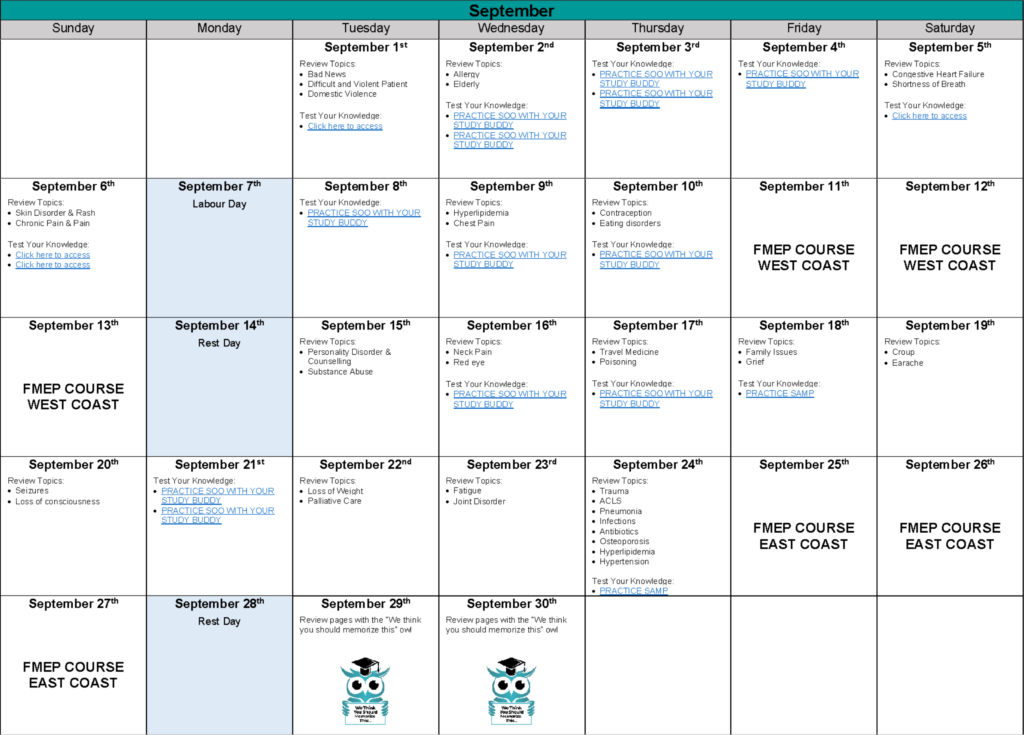
The CCFP exam is quickly approaching, and the FMEP Course is here to help! We...
Comments Off on Put Success on Your Calendar 📅
We are excited to see so many of you join our FMEP courses. Several of...
Comments Off on Burning Feet: Detecting Neuropathy Early